The Person Who Built Your Workday Integrations Is Already Gone
Here's the thing nobody tells you at go-live: the consultants who built your integrations are already on their next project.
A Workday implementation consultant who has been doing this since 2014 described the pattern to us bluntly. Clients almost never hire their implementation partner for post-production support, and even when they do, the specific people who built their integrations have rotated off. Whoever supports your feeds next will be seeing them for the first time.
That gap stays invisible until something forces it open. Usually one of two things does.
The first break
Most integrations built during a Workday implementation are benefits feeds, and to be fair, they mostly run. When they fail, it's usually data, not plumbing. A vendor expects a fixed number of characters and an employee's record has fewer. A file spec assumes one last name and someone has six. The feed did exactly what it was coded to do, and what it was coded to do is written down nowhere your team can read.
So the fix starts with archaeology. Your support partner opens code they didn't write, reconstructs what the original builder intended, and bills hours for the reconstruction before billing hours for the repair. The same consultant put it plainly: anything custom takes the new partner real time to unravel, because they're decoding another firm's decisions before they can touch the problem.
You're paying twice for knowledge your organization already bought once.
The first vendor change
The second forcing event is bigger. At some point you'll switch a 401k provider, a benefits administrator, a rewards platform. The old feed is useless and you need a new integration.
Here is how that actually goes at most companies. HR opens a ticket with a partner. The partner scopes it, builds it, and schedules it. The HRIS lead coordinates testing. And the business owner who made the vendor decision sits at the very back of the process, with one job: wait to be told it's done.
The consultant we spoke with had just lived this with a client changing 401k vendors. She supports integrations daily and still couldn't build one from scratch, because building one means writing code inside a system designed for specialists. If a person with 25 years in HR systems can't self-serve a routine vendor change, your benefits manager never will.
That's the friction. The timeline of your vendor strategy is set by a third party's build queue, not by your team.
Why the knowledge keeps walking out the door
None of this is a failure of the people involved. Implementation partners are paid to get you live on schedule, and post-production durability isn't in the statement of work. Support partners genuinely can't inherit knowledge that only ever existed in one builder's head. Even strong independent consultants, the ones clients keep around for years, will tell you integrations sit outside what they can build alone.
The structural problem is where the knowledge lives. Workday integrations are code. The logic that decides how your fields map, combine, and transform into each vendor's spec exists inside Studio integrations and connectors that only a trained specialist can read. So the institutional knowledge of how your HR data actually moves is locked in an artifact your own team cannot open, written by someone who no longer works on your account.
Every support cycle starts from zero because the asset was never legible to its owner.
What it looks like when the knowledge stays
The fix is to change the form the knowledge takes. When integration logic lives as readable configuration instead of code, the handoff problem mostly disappears, because there's nothing to excavate.
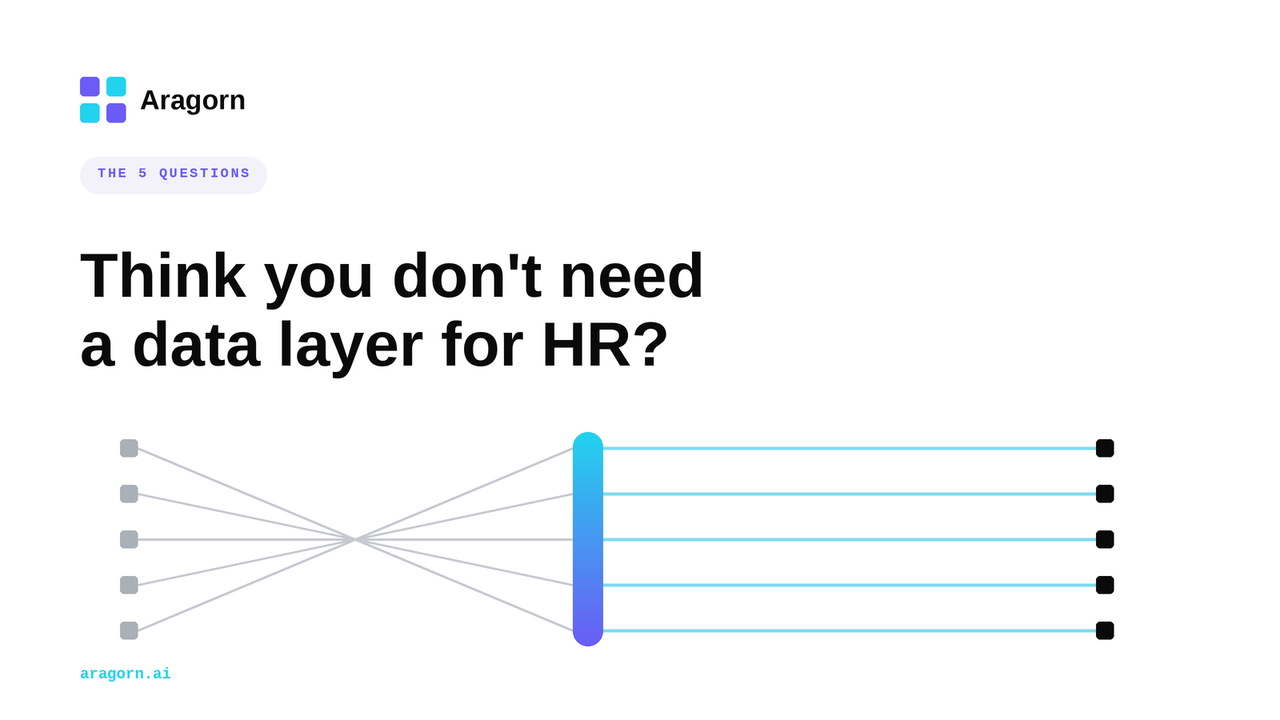
Concretely, that means your team can see every field flowing to every vendor, mapped left to right in business terms. It means the rule "combine these two attributes to produce the value Fidelity calls 123" is visible and editable as a rule, not buried in a transformation script. It means data gets validated against the vendor spec before it ships, so the six-last-names record gets flagged with a fix path instead of failing silently on the vendor's side. And it means a vendor change is a remapping exercise your team runs in days, not a build project you wait on for months.
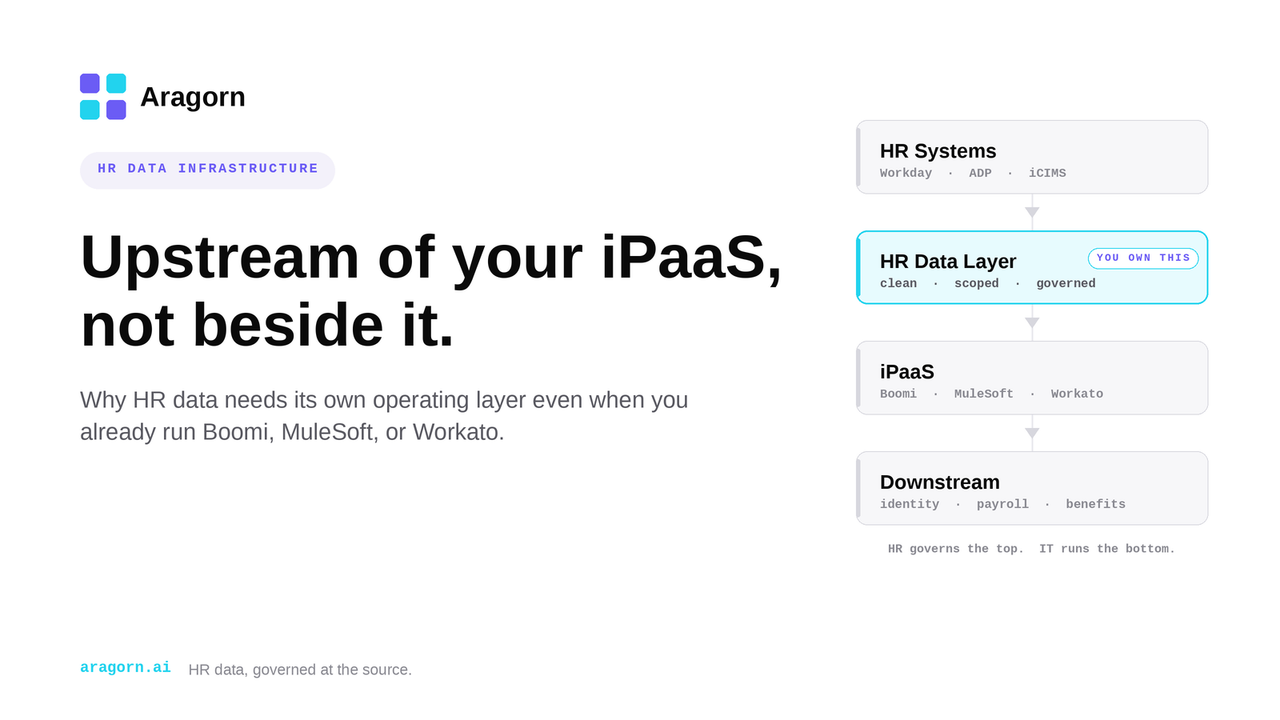
This is what Aragorn does. It sits on top of Workday, surfaces every integration as point-and-click configuration HR can read, and validates data against vendor specs before anything moves. The Friedkin Group runs it across a multi-entity enterprise environment where feed reliability and auditability are non-negotiable.
Your support partner still matters for the hard things. What changes is that routine breaks and routine vendor changes stop being billable archaeology.
The question to ask before your next renewal
If you're mid-implementation, ask your partner one question: when this is over, what artifact do we own that explains how our integrations work, and who on our team can read it?
If you're post go-live, run the test now. Pick your most important benefits feed and ask your team to explain, without opening a ticket, exactly which fields it sends and how each one is derived. If the honest answer is "we'd have to ask the partner," you've found the dependency before it found you.
The takeaway is simple. You paid for those integrations. You should be able to read them.
Book a working session and we'll map your current feeds and show you what they look like as configuration your team owns.